Life in the Dry Zone: My Years at Kaludiyapokuna
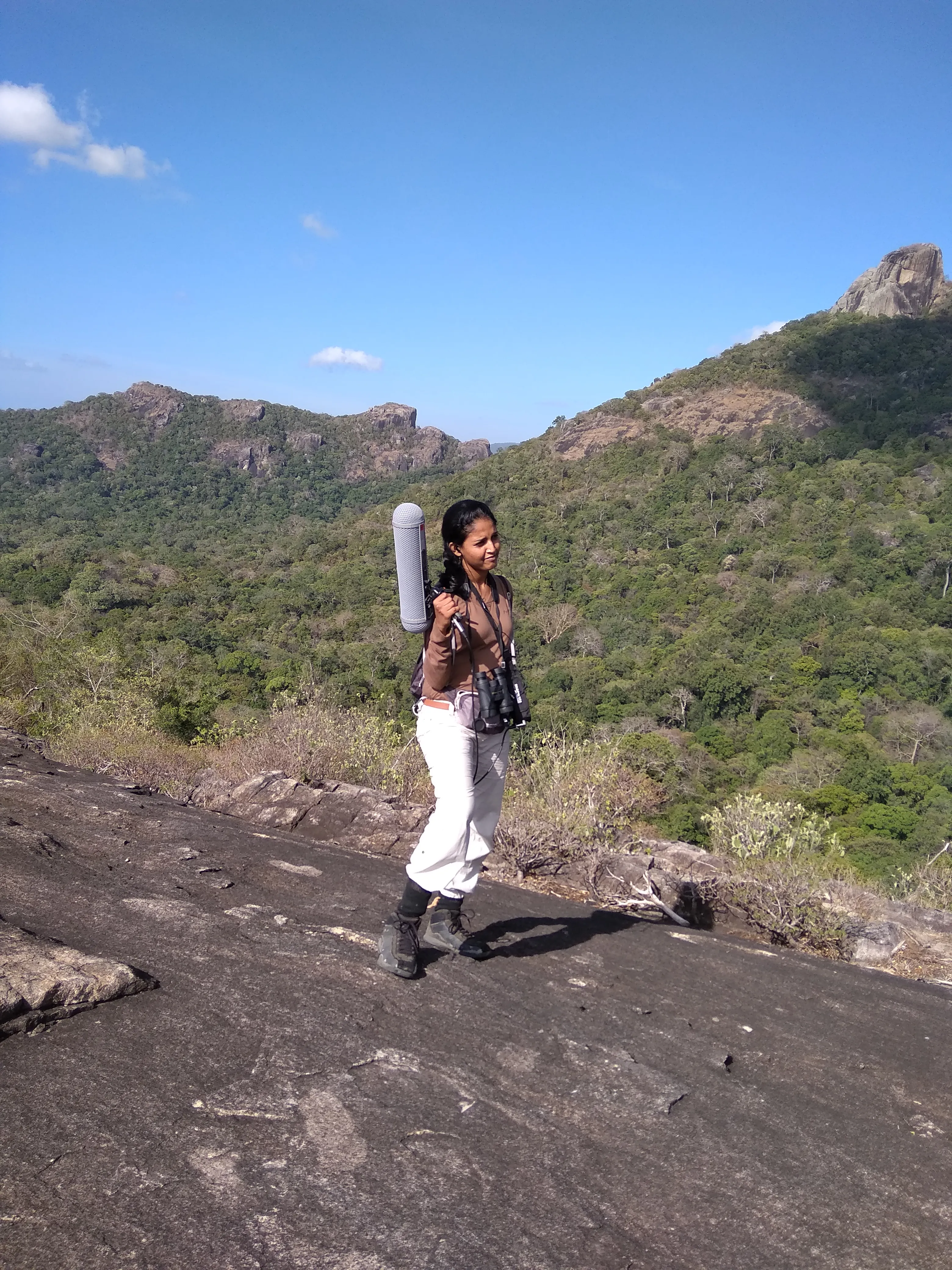
From December 2017 to April 2020, home was a small field station at Kaludiyapokuna — a patch of dry-zone forest in close proximity to Sigiriya, and one of the best places in Sri Lanka to find four of the island’s primate species side by side: the purple-faced leaf monkey, the grey langur, the toque macaque, and the slender loris. I managed the field station for a primate research and conservation project run in collaboration with Rajarata University, Stony Brook University, and the University of Georgia.
Ten months before the real work could begin
Before a single behavioral observation could be recorded, the forest-dwelling monkeys had to get used to us. That took over ten months — walking the same trails day after day, keeping a steady distance, letting troops learn that we weren’t a threat, until they carried on with their lives as if we weren’t there.
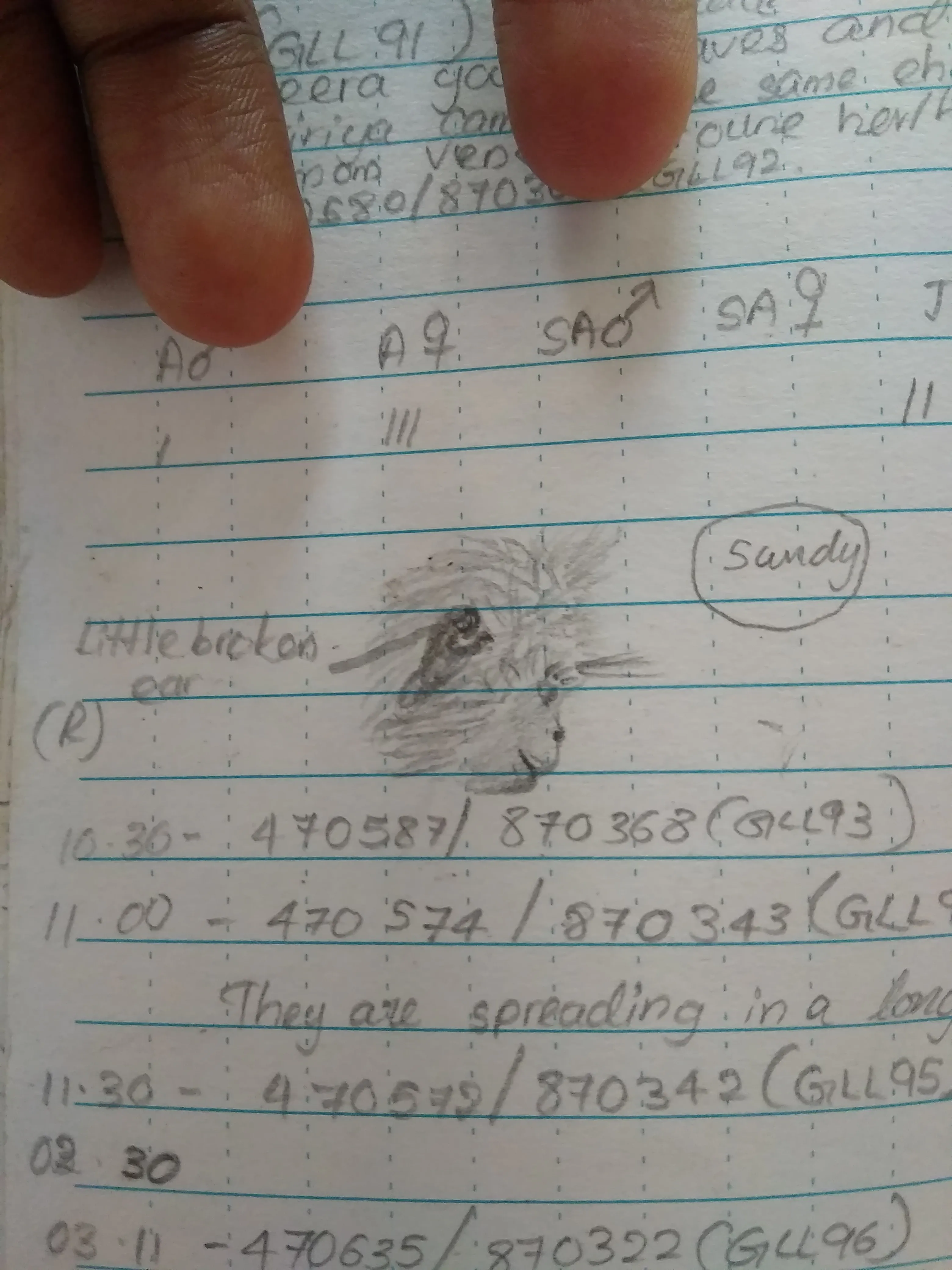
Individual ID sheet — “little broken ear” and a torn ear became as good as a name.
Only once habituation held did individual identification begin: learning to tell troop members apart by scars, coloration, and the small quirks — a notch in a tail, a nick in an ear — that make each animal recognizable on sight.
Every day, before first light
Once habituation was done, the real data collection started: biological samples, behavioral data, and acoustic recordings, day after day. Our days began at 5:45 am, heading into the forest to find the troop and stay with them until the light went. Spending a whole day, alone, in the company of another species is a different kind of experience.
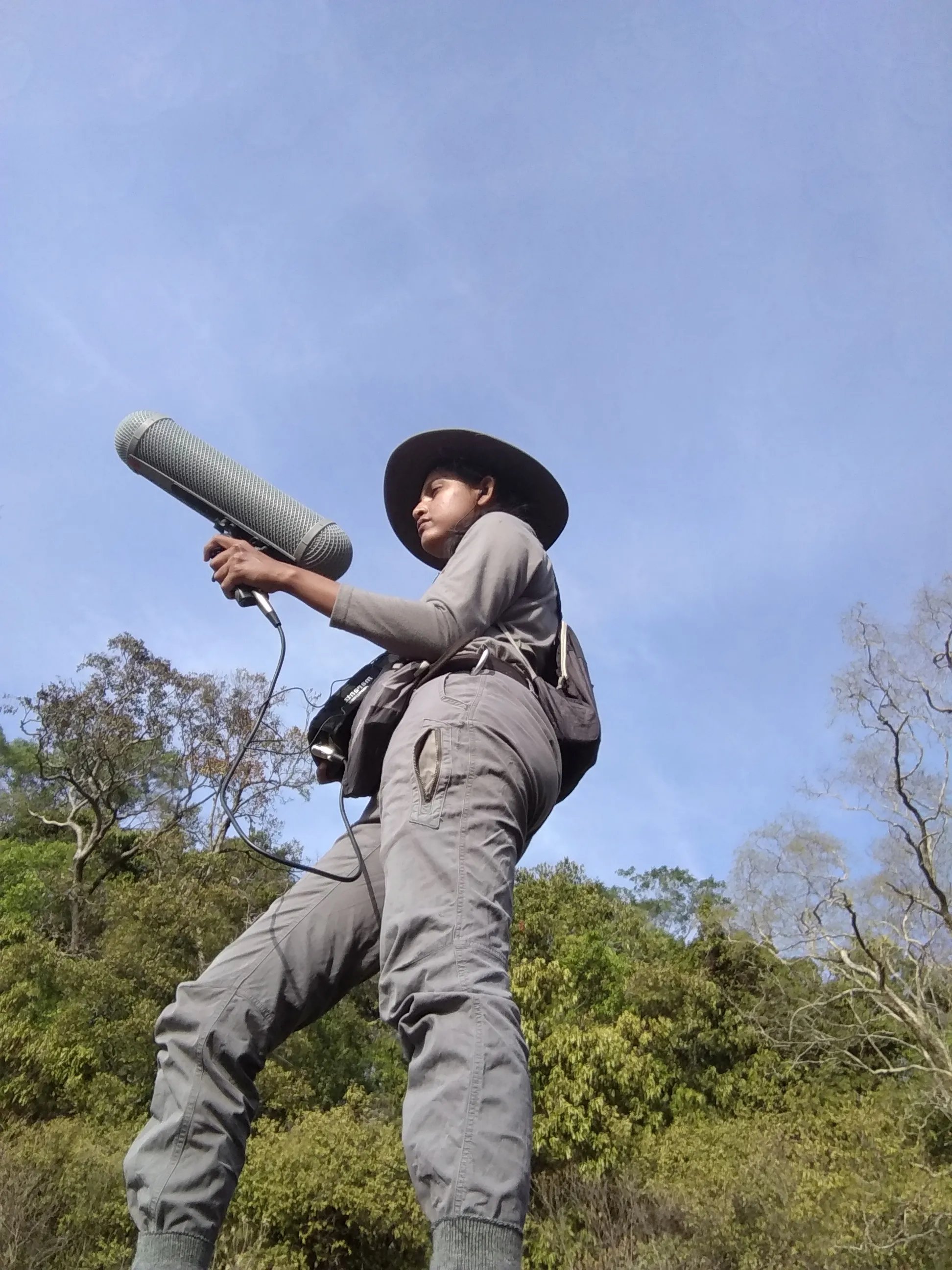
Recording calls meant standing still, mic raised, for as long as the troop kept talking.
Behavioral scans and vocalizations both went into the same notebook, timestamped to the minute — a loud call here, a soft “kurrrrr…kurrrrr” there, a sketch of which tail belonged to which male, because the sound and the sighting only meant something together.
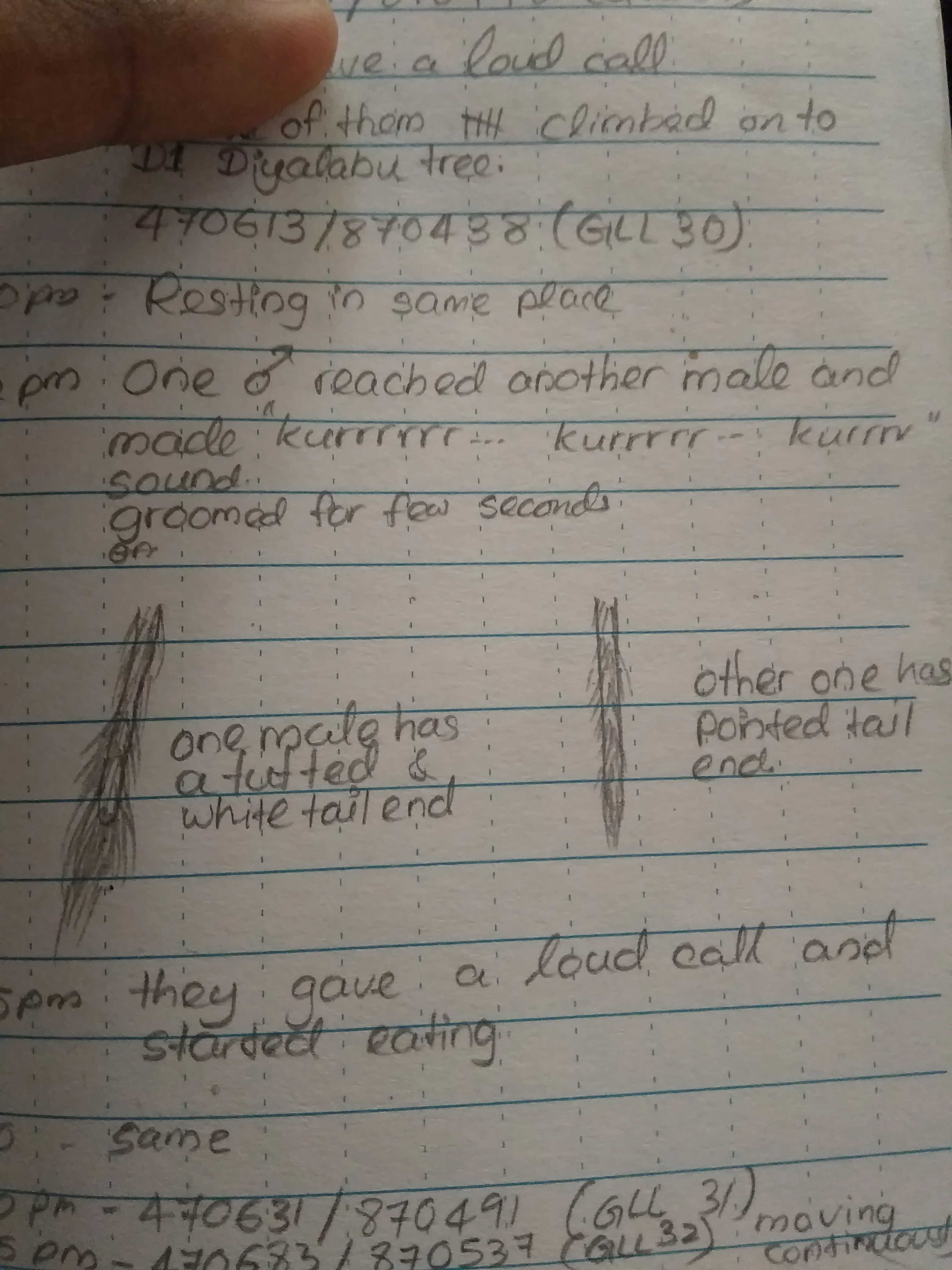
A scan sample from the notebook — calls transcribed phonetically, tail markings sketched for cross-reference.
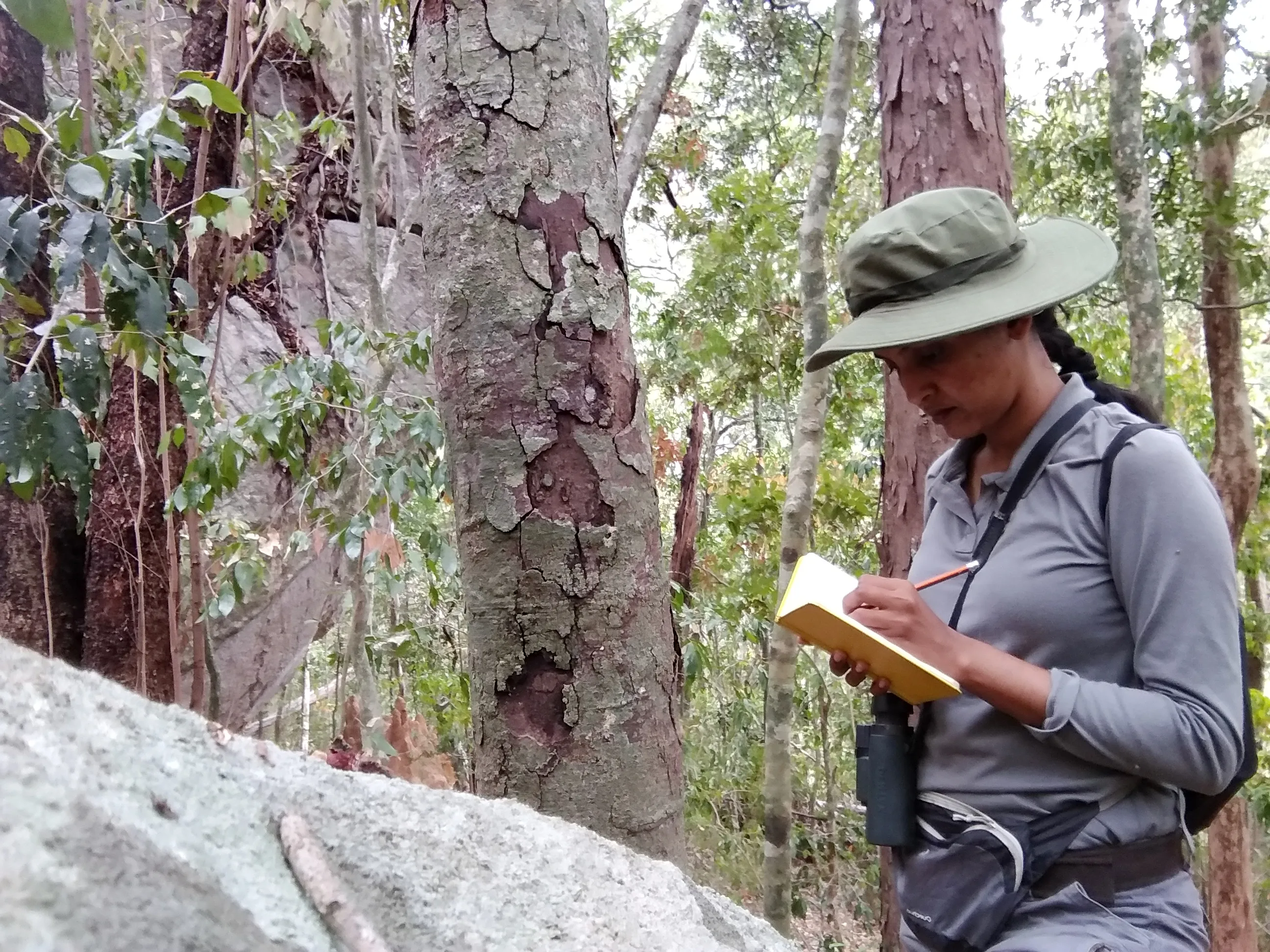
Every observation got written down on the spot — memory alone isn’t data.
The field kit stayed simple by necessity: binoculars, a GPS unit, a bird guide repurposed for anything else that crossed our path, a Sennheiser shotgun microphone rigged to a Marantz recorder for acoustic work, and a stack of waterproof notebooks that outlasted more than one monsoon.
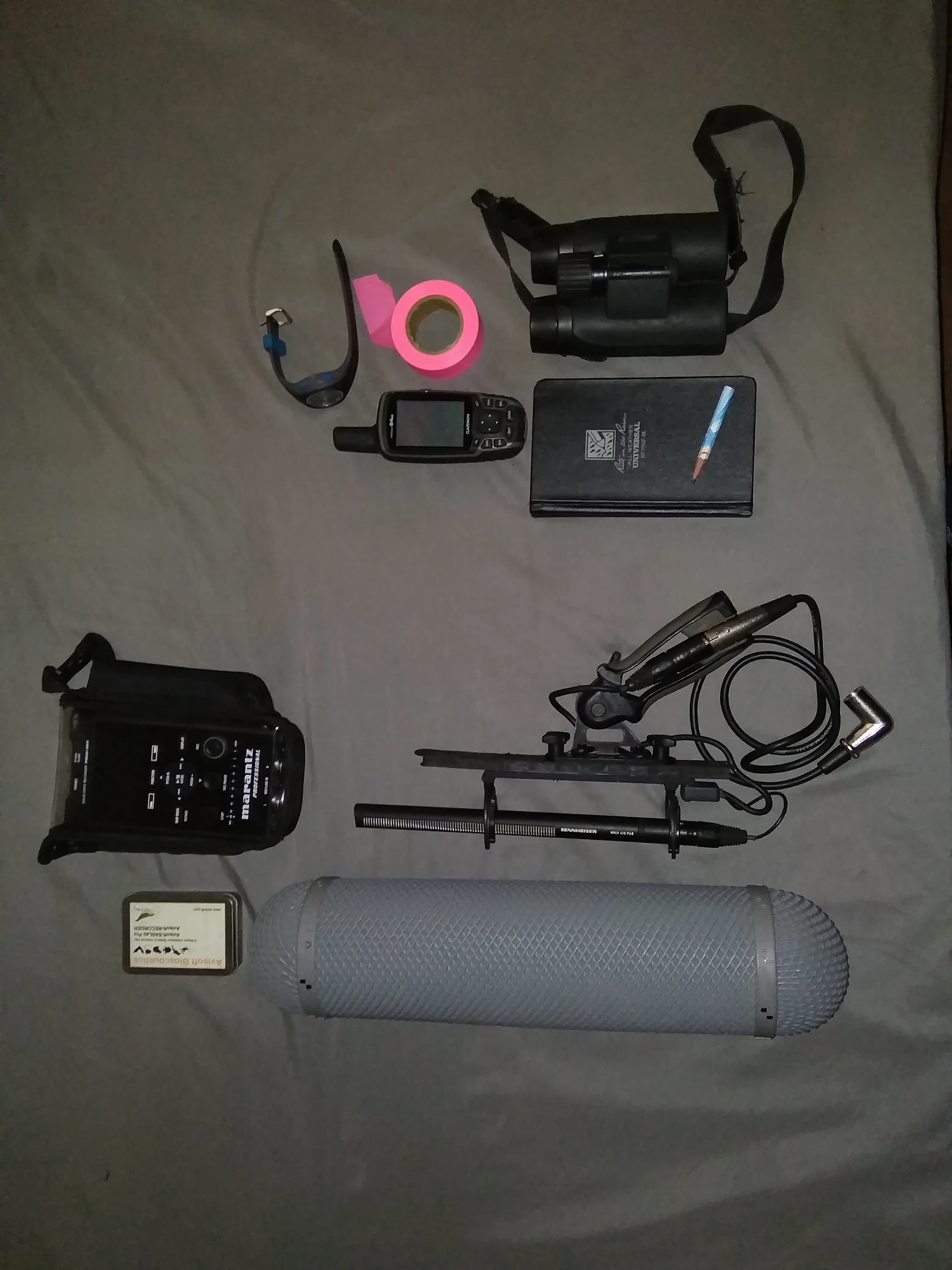
The full kit for a day in the field, packed and repacked every morning at 5:45 am.
From daily notes to published research
That daily routine, sustained over years, fed directly into published research — one paper on the gut microbiome and parasite loads of these endangered langurs, and another documenting a potential hybridization event between purple-faced and grey langurs. Neither would exist without the ten months it took just to be ignored, and the thousands of small, timestamped observations that came after.